


Compounded · Vitality

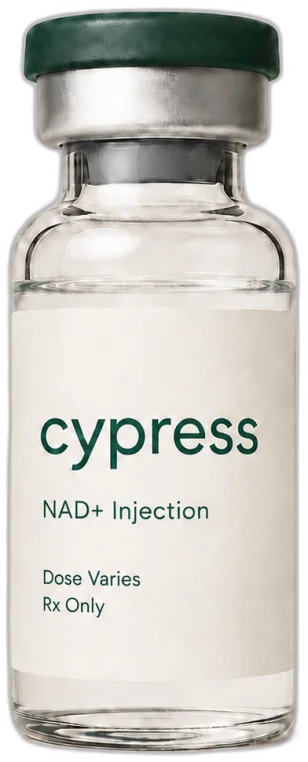
NAD+ Injection

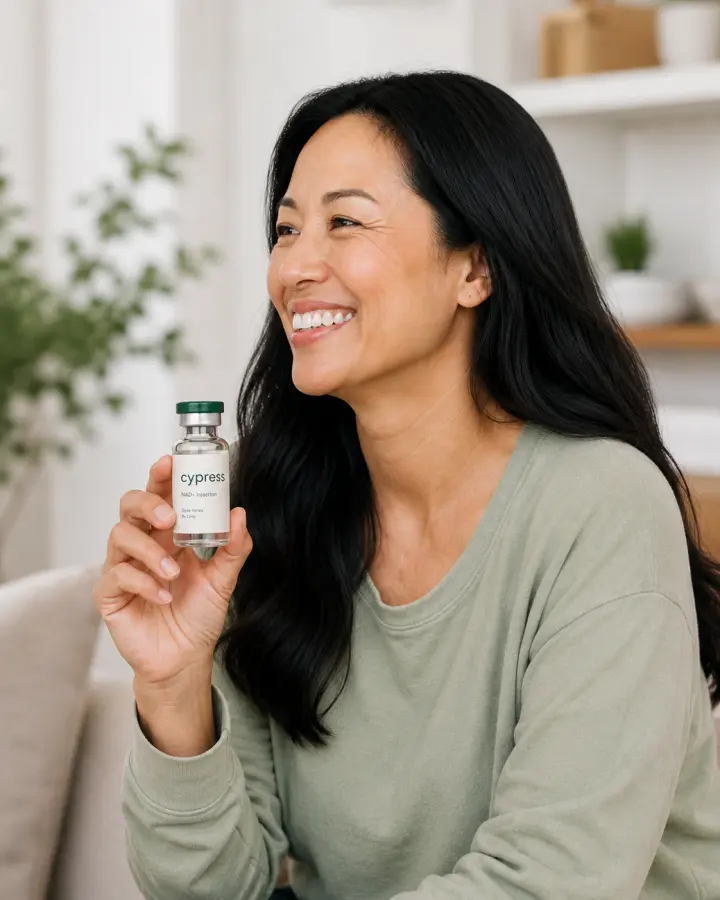
A weekly reset for the energy you used to take for granted.

NAD+ is a coenzyme your cells use to turn food into usable energy and to repair the daily wear-and-tear in your DNA. Levels fall through midlife. Subcutaneous dosing once a week is a clean, predictable way to keep yours topped up — and it bypasses the absorption losses that make oral precursors hit-or-miss.

  • Once-weekly subcutaneous injection — 30 seconds, at home
  • Higher absorption than oral NMN or NR — you actually get the dose
  • Compounded by a state-licensed U.S. pharmacy
  • Includes clinician oversight, dose adjustment, and side-effect support
  • Direct-to-door · cancel anytime on monthly · save more on 6 or 12-month plans
Start your assessment

Why NAD+

A coenzyme your cells actually run on.

Woman in midlife considering her care options

NAD+ (nicotinamide adenine dinucleotide) sits at the center of the chemistry that turns the food you ate this morning into the energy you'll use this afternoon. It's also what your cells lean on for DNA repair through enzymes like sirtuins and PARPs — the housekeeping that keeps tissues working as they should.

NAD+ levels decline measurably from your 30s onward. By midlife, many women are running with notably less than they had a decade earlier. Whether restoring those levels reverses every claim made about it is still an active research area — but the underlying biology is well-established and the early human data is encouraging.

What women on this protocol most often describe: a steadier baseline of daytime energy, faster recovery from physical effort, and a sharper sense of "with-it-ness" in the late afternoon. We don't promise those outcomes. We watch for them, and we adjust if they don't show up.

An easy weekly cadence. Tuned to you.

1
Weeks 1–2 · Acclimation
Typical starting dose is 100 mg subcutaneous, once weekly. Some women feel a mild flush, warmth, or transient nausea in the first 30 minutes — injecting after a small meal usually settles it.
2
Weeks 3+ · Steady state
Your clinician may step the dose toward 150–200 mg weekly, depending on how you're tolerating it and what you're noticing. Effects build gradually — most women describe a clear shift by week 4 to 6.
3
Ongoing · Care, not just refills
Your plan includes clinician check-ins, dose adjustment, side-effect support, and the option to layer in or step away from other vitality protocols as your picture changes.

Side effects & safety

What to know before you start.

Woman reviewing health information at home

Most common: a brief flushing or warmth sensation right after injection, mild nausea, occasional headache, injection-site tenderness. These are typically dose-related and resolve within an hour. Slowing the injection or pre-treating with a small meal usually helps.

Less common but worth flagging: palpitations, jitteriness, or sleep disruption if you inject too late in the day. We recommend morning dosing for that reason.

Not appropriate if: you have an active malignancy under treatment, are pregnant or breastfeeding, or have an unstable cardiovascular condition. Tell your clinician about all medications and supplements — methylation-related supplements in particular can interact.

Compounded medication notice
Compounded NAD+ is dispensed by state-licensed U.S. pharmacies in FDA-regulated facilities under the patient-specific 503A exception. It is not FDA-approved as a finished product. NAD+ for vitality use is considered an emerging therapeutic area; your clinician will determine whether it is appropriate for your specific health profile.

Questions

Answers to
common questions.

How is this different from oral NMN or NR supplements?
A meaningful share of an oral dose never reaches the bloodstream as NAD+.
NMN and NR are precursors — your body has to convert them to NAD+, and a meaningful share of an oral dose is degraded in the gut and liver before it reaches circulation. Subcutaneous NAD+ delivers the molecule directly. It's a more reliable way to know you're actually receiving the dose your clinician chose.
How is this different from a NAD+ IV drip?
Same molecule, gentler delivery, no four-hour appointment.
IV drips deliver a large bolus over several hours and tend to produce stronger short-term sensations — both desired and uncomfortable. Subcutaneous dosing is smaller, weekly, and at home. For most women looking for a sustainable midlife protocol, weekly subq is more practical and easier to tolerate.
When am I charged?
Not until a clinician confirms your eligibility.
You're not charged when you submit. Your card is saved. A licensed clinician reviews your assessment, typically within 24 hours. If approved, you'll be notified by email before the first charge. If not approved, you're not charged.
Can I cancel?
Yes — with full transparency on what you've committed to.
Yes. The 1-month plan can be cancelled anytime. The 6 and 12-month plans are committed terms billed monthly — cancel future renewals after the term ends.

Find out if NAD+ fits your picture.

The 3-minute vitality intake is free. If you're a candidate, your clinician follows up within 24 hours.

Start your assessment